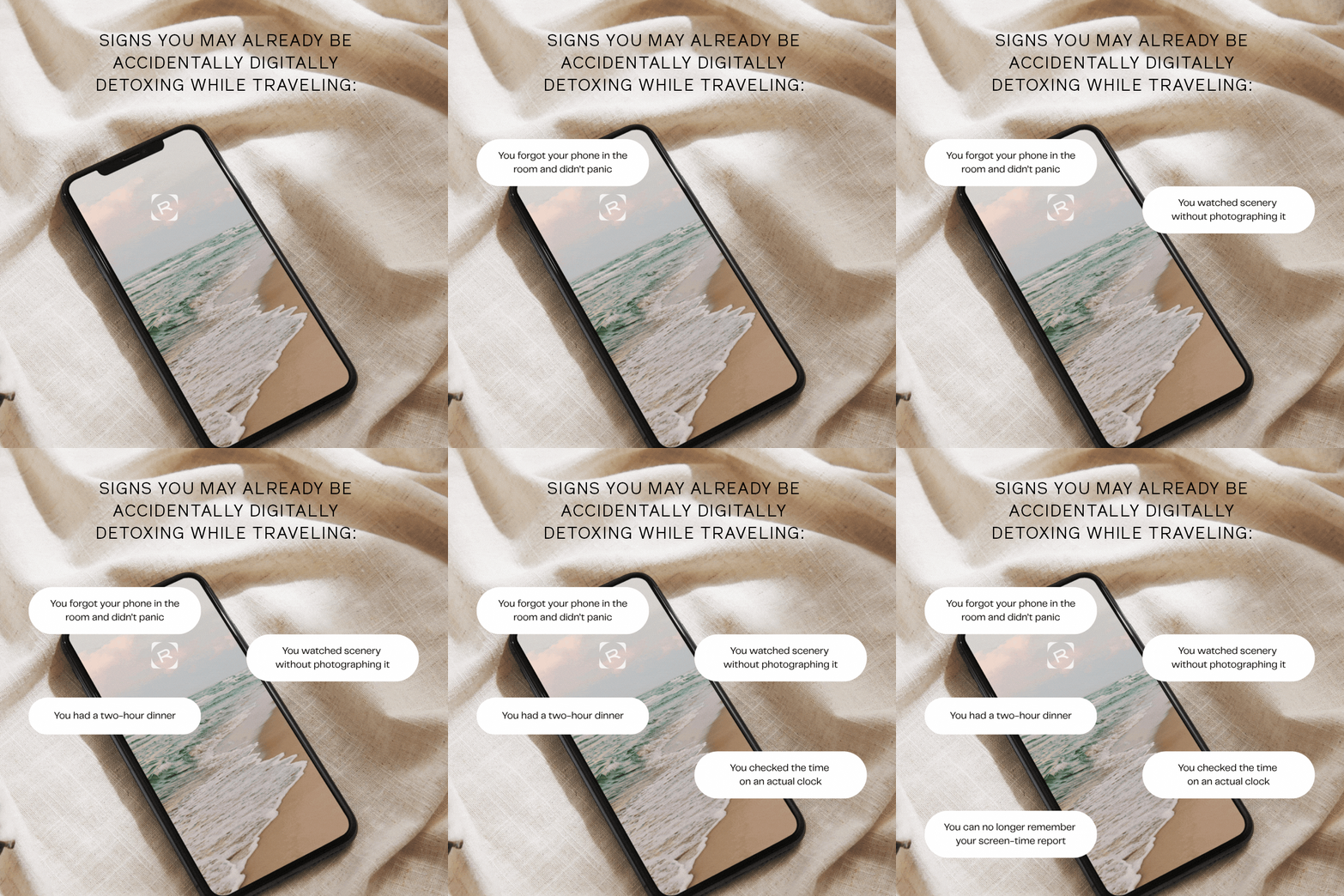
There’s a particular kind of advice that immediately makes people suspicious. It usually arrives wrapped in earnestness and accompanied by words like intentionality. “You should really do a digital detox,” someone says, probably while posting a photo of their herbal tea on Instagram.
And honestly? I resist it on principle.
I don’t want to hand over my phone at a spa weekend. I don’t want to journal about my screen time. I don’t want a wellness expert in expensive linen explaining that I need to “reconnect with presence.” And after watching The White Lotus, I’m not entirely convinced forced digital detox leads anywhere especially healthy anyway. I grew up before everyone carried the internet in their pocket. I know what boredom is. I’ve met it personally.
Also, I like my phone. I like knowing the weather before I leave the house. I like maps that calmly reroute me away from disaster. I like texting people photos of things they didn’t ask to see, like a pastry that deserves legal recognition or a suspiciously beautiful alleyway in Florence. I grew up memorizing phone numbers and don’t want to do that again. Or drink from garden hoses.
And yet.

Travel does something strange. It quietly loosens your grip on the digital world without ever announcing itself as self-improvement. No one calls it a detox. There’s no challenge involved. It just… happens.
Partly because travel demands your attention in ways ordinary life no longer does.
At home, you can move through entire days barely looking up. You know the grocery store aisles. You know the route to work. You know what’s in the fridge, and which streaming service currently holds the one show everyone insists you watch. Life becomes operational.
Travel interrupts that.
Suddenly, you have to pay attention again. You can’t really stare at your phone while navigating a busy square, deciphering a train platform, or wandering unfamiliar streets without the risk of becoming either hopelessly lost or mildly run over by something small and fast-moving.
You also notice that in many places, people still seem remarkably comfortable lingering. Meals stretch. Conversations wander. Nobody appears eager to optimize an afternoon. A coffee is not treated as fuel delivery. It’s an event. Sometimes a surprisingly long one.
And somewhere along the way, you realize you haven’t checked your email in hours.
Not because you’re virtuous.
Because you forgot.
Uninterrupted thought


That may be the most miraculous part of travel: it replaces your attention rather than forcibly removing temptation. The phone becomes less interesting because the world becomes more interesting.
Slow travel especially does this well.
When your days unfold more gradually – unpacking once, moving gently through changing scenery, lingering over dinner rather than rushing toward logistics – you begin noticing things you normally bulldoze past.
You spend ten uninterrupted minutes looking out a window. You sit through dinner without placing your phone face-up beside your wine glass like an emotional support device. You have entire conversations uninterrupted by someone saying, “Sorry, just one second…”
It feels strangely luxurious now — uninterrupted thought.
Many of us are old enough to remember life before constant digital access, but young enough to have fully absorbed it. Which may explain why travel affects us so strongly. It temporarily returns us to an older version of ourselves – the one capable of sitting somewhere quietly without immediately reaching for stimulation.

Not perfectly, of course.
You still take photos. You still text people. You still look things up. The point isn’t becoming a nineteenth-century poet with no Wi-Fi. It’s realizing how pleasant it feels when your mind stops fragmenting every thirty seconds.
And oddly enough, some of the best travel memories happen in those in-between moments when nobody’s documenting anything.
A long lunch that slowly dissolves into another bottle of wine. Watching lights appear along the water after dinner. Sitting in a town square doing absolutely nothing productive while the world continues around you.
At home, we often treat unoccupied moments like system failures. Travel reminds you they’re actually where life tends to happen.
The annoying part
The annoying part is that the wellness people were, technically, right.
Not about the moon water or sound baths. But about the fact that our brains probably aren’t designed to absorb six hundred headlines, fourteen group texts, and three separate password verification codes before noon. The trick, though, is that most of us don’t want discipline imposed on us. We want distraction replaced by something better
That’s what travel does. It doesn’t demand you disconnect. It simply gives you a more compelling connection.
Which is fortunate, because if someone actually uses the phrase “digital detox” around me one more time, I may need to lie down in a dark room with my phone.
Still, somewhere along the way, it’s nice to remember how good it feels to look up again.